
In recent years, infrastructure construction, mining, and geological exploration activities have kept growing in the Middle East (Saudi Arabia, the UAE, Oman, Qatar, etc.), and 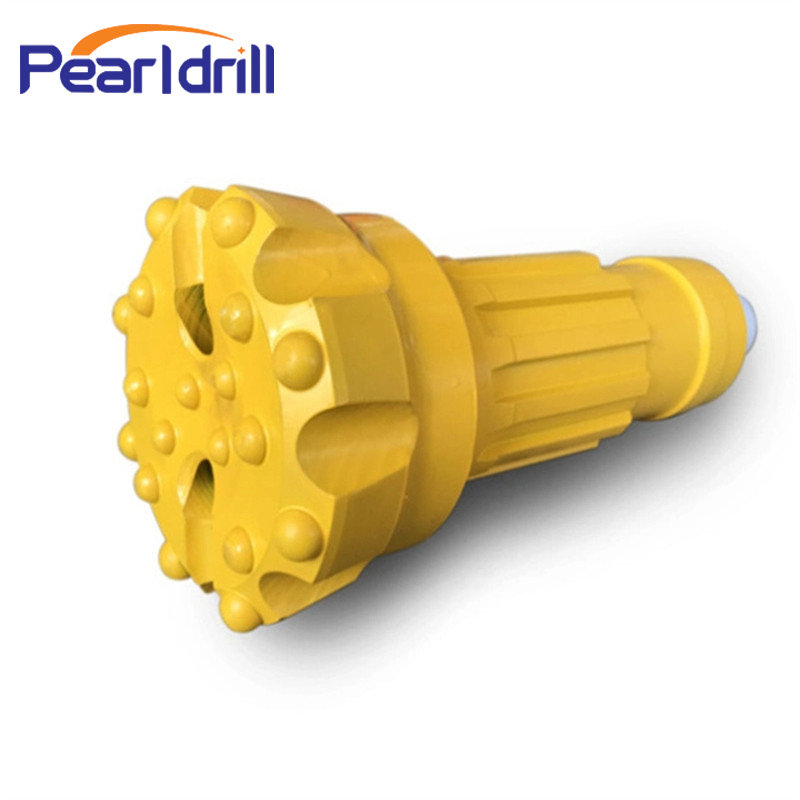 drilling operations often run into high-hardness, highly abrasive rock formations. In 2026, DTH (down-the-hole hammer) drill bit suppliers' application strategies in this region need to revolve around rock formation matching, materials and processes, operating parameters, and full life-cycle cost. This article sorts out the key application points from a supplier's perspective and summarizes the key technical parameters and selection recommendations in table form.
1. Limestone (dense limestone): widely distributed, medium-to-high hardness, medium abrasiveness;
2. Dolomite: relatively high hardness, with locally high silica content;
3. Basalt: high hardness and strong abrasiveness, commonly found in Oman and western Saudi Arabia;
4. Granite: high hardness and strong abrasiveness, mostly seen in geological exploration and mining;
5. Quartz sandstone/siliceous rock: extremely strong abrasiveness, causing significant wear on drill bits.
Suppliers should recommend different tooth types and head structures based on rock hardness and abrasiveness: for high-hardness, low-abrasiveness formations, spherical teeth (ball teeth) are preferred to maintain impact crushing efficiency; for highly abrasive formations, conical teeth/ballistic teeth are preferred, along with higher-grade carbide and brazing strength. The head face design (flat face, concave face, convex face) needs to match the hole diameter and air pressure.
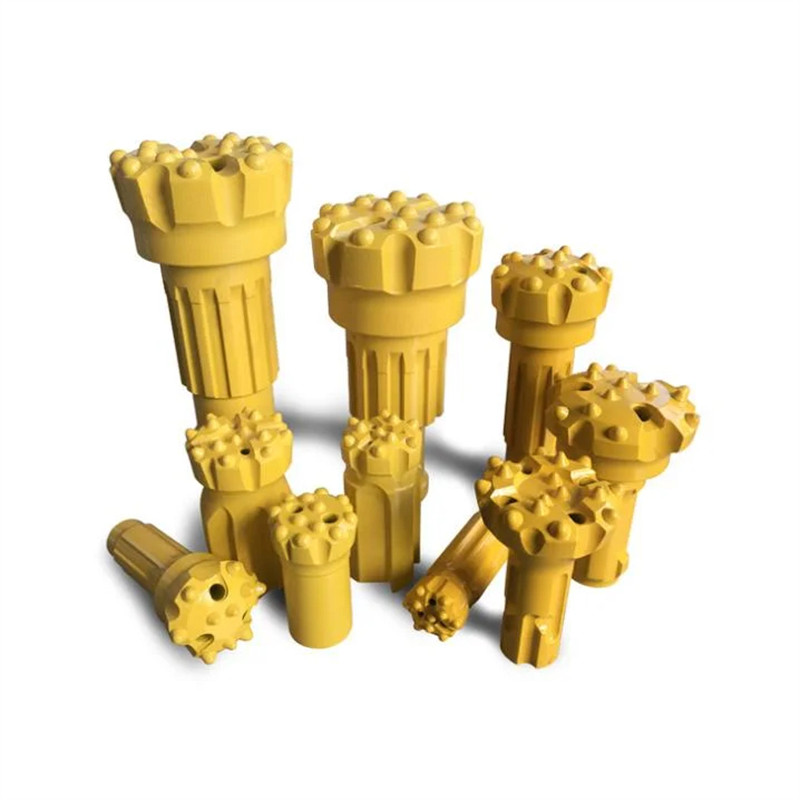
In 2026, suppliers generally use high-cobalt fine-grain carbide teeth to improve wear resistance and impact toughness, and the steel body uses high-strength alloy steel with optimized heat treatment processes; some suppliers have introduced interference-fit tooth holes + vacuum brazing to reduce tooth loss in high-hardness rock operations.
In high-hardness rock, suppliers need to work with customers to optimize air pressure, air volume, impact frequency, and feed force: increase air pressure (e.g., 1.7–2.5 MPa) to enhance cuttings removal and impact energy transfer; control feed force to avoid excessive drill bit wear; use foam/atomized dust suppression to improve cuttings removal.
Suppliers should provide drill bit wear monitoring, refurbishment, and remanufacturing services, extending service life through tooth replacement and steel body repair to reduce cost per meter drilled; at the same time, establish local spare parts inventories and technical support teams to shorten downtime.
Rock Type
Uniaxial Compressive Strength (MPa)
Abrasiveness
Recommended Tooth Type
Carbide Recommendation
Recommended Air Pressure (MPa)
Drill Bit Face Design
Application Notes
Dense limestone
120–200
Medium
Spherical teeth
Fine-grain high-cobalt alloy
1.7–2.2
Flat face/concave face
Control feed force to prevent uneven wear
Dolomite
150–250
Medium-high
Spherical + conical teeth
High wear-resistant grade
1.8–2.4
Concave face
Watch for wear from siliceous interbeds
Basalt
200–350
Strong
Conical teeth/ballistic teeth
High-cobalt fine-grain alloy
2.0–2.5
Convex face/flat face
Strengthen brazing to prevent tooth loss
Granite
200–300
Strong
Conical teeth
High impact-resistant alloy
2.0–2.5
Convex face
Control impact frequency to prevent tooth cracking
Quartz sandstone/siliceous rock
180–300
Extremely strong
Conical teeth + wear-resistant hardfacing
Ultra-fine-grain high-cobalt alloy
2.2–2.5
Flat face
Shorten inspection intervals and refurbish in time
Summary
In 2026, DTH drill bit suppliers in high-hardness rock applications in the Middle East are shifting from single-product supply to comprehensive solutions of "material + structure + service." Facing highly abrasive formations such as granite, basalt, and quartzite, suppliers need to focus on carbide tooth upgrades, tooth layout optimization, and digital monitoring, combined with localized supply and parameter matching strategies, to improve drilling efficiency and drill bit life. When selecting, users should comprehensively consider rock conditions, operation scale, and full life-cycle cost to achieve stable and efficient drilling in high-hardness rock.
 Click Below to Consult Our Experts on Maximizing Efficiency with High-Performance Tools.
 More Related Articles About [ Drill Bits]
Wear Resistance Performance of DTH Drill Bit Manufacturers' Bits in Quartz Mines
2026 PDC Drill Bit Manufacturers Quarry Cost Effectiveness Comparison
Which Type of Water Well Drill Bit Can Drill Quickly in Granite in 2026Contact: Mr Chen
Phone: +86 13874354330
Tel: +86 746 8323309
Email: pearldrill02@guangzhouintl.com
Add: 3rd Floor, Wanli Market, Fenghuang Road, Lengshuitan District, Yongzhou City ,Hunan Province China
