
In water well drilling construction in mountainous and hilly areas, working on slopes is a normal part of the job. Because of things like sloped ground, soft soil, poor drainage, and 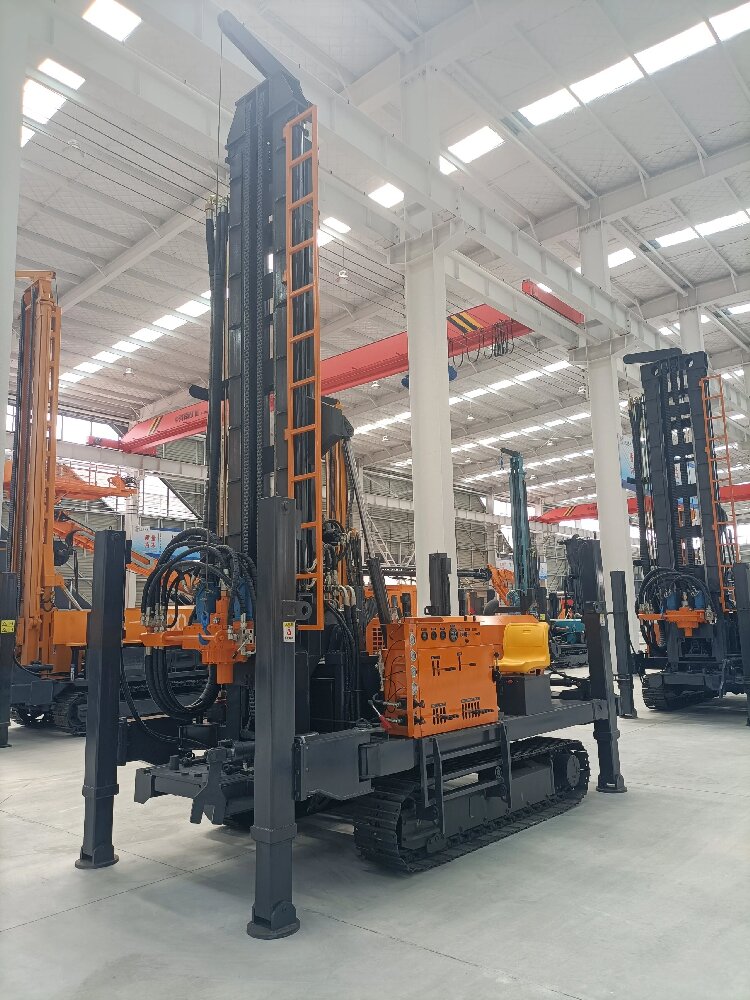 uneven force on the equipment, water well drilling rigs often run into stability problems like shaking, sliding, and tipping over. This doesn't just cause crooked holes and poor well quality—it can also lead to equipment damage and injuries or even deaths, seriously delaying the construction schedule and driving up costs. To tackle all kinds of stability problems in slope work, here are the solutions and a standardized construction process, offering a professional reference for drilling on slopes in the field.
There's loose soil, gravel, and soft soil layers on the slope, so it can't carry enough weight. The rig's outriggers or tracks sink and shift under pressure. There's no drainage on the slope, so rainwater washes away the ground, causing foundation collapse and soil landslides, which messes up the equipment's support base.
The height difference on the slope makes the rig's left-right and front-back levelness way off. During work, the vibration from the drill pipe rotating and mud rushing around amplifies the tilted forces, making the body shake and slide. Regular rigs have outriggers that can't adjust on their own, so they can't handle the slope's height differences.
Not leveling the slope in advance, not fixing anti-slip protection structures, placing the rig at a bad angle, extending outriggers to different lengths, and raising the load too fast during work all make the rig more likely to become unstable.
Traditional regular rigs have simple chassis structures and lack stability control features, so they have very little room for error on slopes. But Pearldrill water well rigs have been optimized in every way to address these pain points, from hardware setup to construction adaptability, precisely solving the slope stability problem.
Leveling and compacting the site is the prerequisite for preventing rig settling and instability. Before construction, the working slope needs to be carefully treated: completely clear away loose soil, weeds, and loose gravel, and compact soft soil layers in layers. For slopes greater than 10°, use a slope benching technique—dig out stepped, level working platforms to get rid of the slope's tilt and height difference. At the same time, dig an anti-slip retaining ditch on the downhill side of the rig, fill it with rocks, and compact them to make an anti-slip retaining wall that blocks the equipment from sliding downhill. Also, set up drainage diversion channels in advance to guide rainwater and construction mud away from the equipment support area, so the foundation doesn't get washed out and softened.
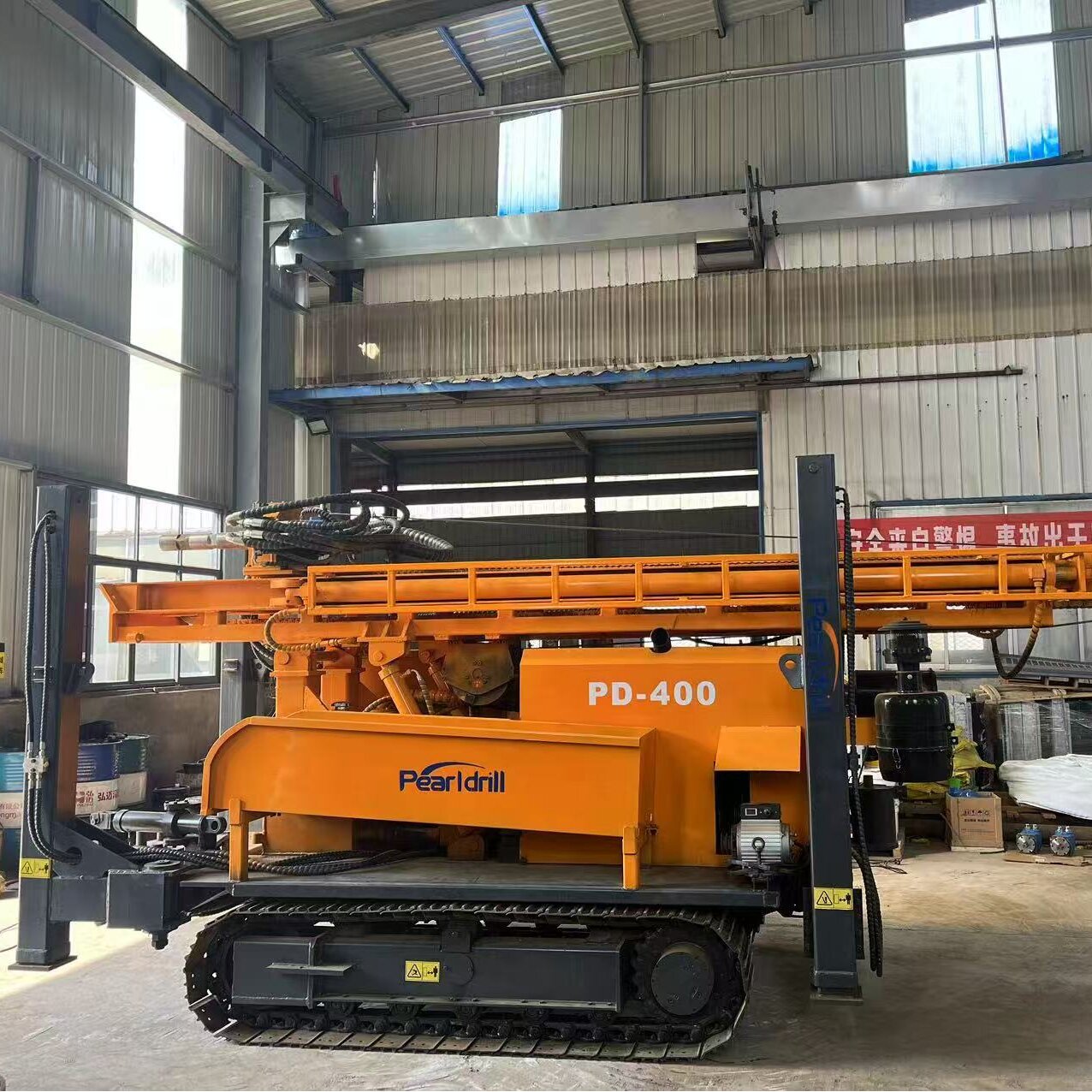
Regular rig outriggers can't adapt to slope height differences, which is a key weakness that makes the body tilt and become unstable. All Pearldrill water well rigs come with an independent four-group adaptive hydraulic outrigger system, supporting single-leg independent lifting and fine adjustment. It can precisely adapt to slope height differences and quickly adjust the body to a level state, solving the uneven force problem at the root. The outriggers have extended adjustment sections, meeting the leveling needs of slopes up to 25°. The bottom of the outriggers uses thickened, anti-slip, wear-resistant pads, increasing the ground contact area, effectively reducing pressure per unit area, and preventing the outriggers from sinking or sliding.
Pearldrill tracked water well rigs use widened and thickened anti-slip tracks. The track patterns are deeper, and the ground contact area is larger, so slope grip is way better than regular rigs. After the equipment is in place, start the track hydraulic locking function to lock the track walking structure, preventing the tracks from sliding or shifting during work. For steeper construction sites, use special anti-slip wedges to fix the front and back ends of the tracks—double locking, completely preventing the whole rig from moving.
During drilling, the continuous vibration from the drill pipe rotating and mud rushing around is the main dynamic cause of rig shaking. Pearldrill high-end water well rigs come with a smart vibration monitoring system that can monitor the rig's tilt and vibration amplitude in real time. If the data goes beyond the safety threshold, it automatically warns and fine-tunes the outrigger height or lowers the working load, preventing vibration from amplifying the tilt risk. At the same time, the equipment has a flexible shock-absorbing body structure that effectively buffers working vibration and keeps the body stable the whole time.
Comparison dimension
Regular water well rig
Pearldrill water well rig
Max adaptable slope
Only adapts to gentle slopes ≤10°, can't work on steep slopes
Adapts to 5°-25° full-range slopes, wider adaptability
Body leveling method
Manual uniform outrigger adjustment, can't adapt to slope height differences, low leveling precision
Four hydraulic outriggers with independent adaptive fine adjustment, fully automatic precise leveling, error ≤0.5°
Anti-slip fixing setup
No dedicated anti-slip structure, only simple pads, easy to slide and sink
Thickened anti-slip pads + track hydraulic locking + anti-slip wedges, triple anti-slip protection
Vibration resistance
No shock-absorbing structure, big working vibration, obvious body shaking, easy to drill crooked holes
Flexible shock-absorbing body + smart load control, effectively buffers vibration, body stays stable the whole time
Safety protection features
No monitoring or warning, high risk of tipping and sliding
Smart tilt and vibration dual monitoring, automatic warning when exceeded, smart control, maximum safety
 1. Site survey and pre-treatment: Survey the slope grade and soil conditions, clear debris and loose rocks from the work area, build stepped working platforms, dig anti-slip retaining ditches and drainage channels, and compact the foundation.
2. Precise equipment positioning: Park the Pearldrill rig perpendicular to the slope direction, adjust the body position to ensure the drilling point is precise, and keep the rig's center of gravity centered to reduce tilt forces.
3. Smart leveling and reinforcement: Start the hydraulic outrigger independent adjustment system, complete the body leveling calibration, lay anti-slip pads, lock the track walking structure, and install anti-slip wedges for steep slope scenarios.
4. Startup inspection and test run: Turn on the machine and check whether the smart monitoring system is working properly. Do a low-speed no-load test run, observe the body's vibration and tilt state, and after confirming there's no shaking or sliding, gradually increase the working load.
5. Full-process dynamic monitoring: During work, pay close attention to the monitoring data in real time, regularly check the stability of the outriggers and tracks, and if it rains or the soil gets loose, stop immediately and recheck and reinforce.
1. Never work directly on the original loose slope surface. You must level and compact it in advance to prevent foundation settlement risks.
2. Never start the machine before the outriggers are fully fixed and the body is leveled, to avoid working with a tilted load.
3. Avoid concentrated load on one side during work. Keep the drill pipe and body center of gravity stable to reduce lateral forces.
4. After rain, the slope soil is soft. You need to re-compact the foundation and check the equipment's fixing status before resuming work.
Summary
The core problem with rig instability on slopes is insufficient foundation bearing capacity, unbalanced equipment force, poor dynamic vibration resistance, and missing protective measures. Traditional rigs are limited by their hardware setup and struggle to adapt to complex slope conditions, which can easily lead to safety hazards and construction quality defects.
How Do Water Well Drilling Rig Makers Help Customers Fish Out Broken Drill Pipes
Advantages of Hydraulic Water Well Drilling Rigs Exported from China
 Click Below to Consult Our Experts on Maximizing Efficiency with High-Performance Tools.
 More Related Articles About [Water Well Drilling Rig]
Contact: Mr Chen
Phone: +86 13874354330
Tel: +86 746 8323309
Email: pearldrill02@guangzhouintl.com
Add: 3rd Floor, Wanli Market, Fenghuang Road, Lengshuitan District, Yongzhou City ,Hunan Province China
