
When you're tapping into groundwater these days, hitting a depth of 200 meters is pretty much your textbook medium-to-deep water well. Whether you're drilling for farmland irrigation, heavy-duty industrial supply, or geothermal heat pump loops, building a 200-meter well is a seriously complex piece of engineering. A major question that constantly pops up among project owners and rookie drilling crews is: "When you're running a water well Drilling Rig down to 200 meters, do you actually need to install casing during drilling and well completion?"
The short answer is: almost absolutely yes. However, exactly how deep you need to go, what materials you should use, and the specific completion methods you'll need all come down to the geological makeup of the ground (like quicksand, collapsing layers, or bedrock) and the exact drilling method your rig uses.
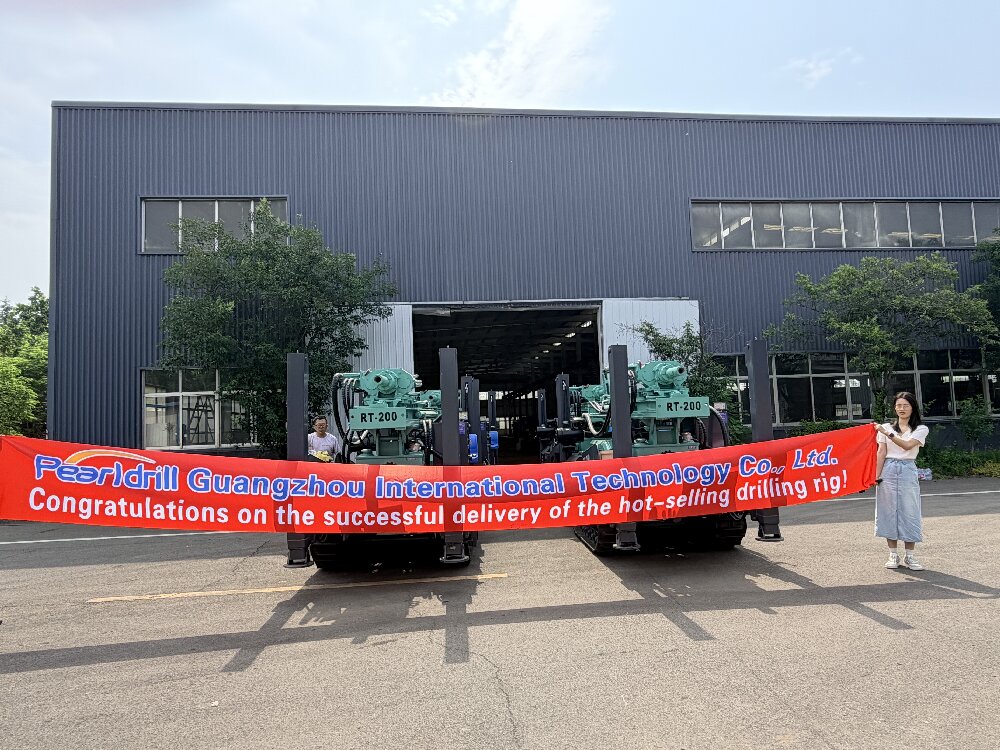
Within that 200-meter stretch, you'll usually pass through loose topsoil, quicksand layers, or fractured rock zones. Without casing to back it up, the well walls can easily suffer major cave-ins due to underground water erosion and the disruption of underground pressure balances. If that happens, your entire well is ruined.
The shallow layers of a 200-meter well (typically the first 0 to 30 meters) are often full of shallow surface water or domestic wastewater. By running a blind pipe (solid casing without slots) and sealing it with a cement grout ring, you can effectively block this low-quality shallow water from trickling down into your deep, pristine groundwater.
A 200-meter deep well usually requires a high-power submersible pump. Casing gives this pump a long-term, stable, straight, and smooth tunnel to run through, protecting it from getting jammed by rocks falling from the well walls.
Right where the main water-bearing layers are, the solid casing is swapped out for "screen pipes" (like bridge slot screens or perforated pipes wrapped in mesh). This design lets the groundwater flow right in while blocking the surrounding sand and mud, making sure the water you pump up is crystal clear.
> A quick tip from Pearldrill: If you are drilling through solid, intact bedrock (like granite or hard limestone) where the formation is incredibly stable and doesn't leak, theoretically you could leave it as an open hole (no casing). However, even in pure rock formations, the loose topsoil layer over the rock (usually the first 0 to 40 meters) must have a surface casing installed. Otherwise, mud and sand from the top will constantly drop to the bottom and clog up your water-producing zone.
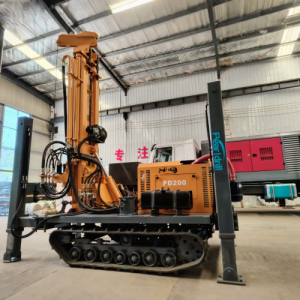
In these kinds of soils, if you use traditional forward mud circulation drilling, you'll run into serious cave-ins and hole-shrinking issues before you ever hit 200 meters. For this setup, you have to use the "casing-while-drilling" (or casing advancement) method—meaning the casing is driven down simultaneously right behind the drill bit. In this terrain, you need full-length casing from top to bottom for the whole 200 meters.
Typically, the top 0 to 50 meters consist of mud, clay, or sand, and then you hit hard bedrock from 50 down to 200 meters. The standard game plan here is: first, use a large-diameter bit to drill through the topsoil and go 2 to 3 meters into the bedrock. Next, slide in a steel surface casing and seal the bottom tight with mud or cement to block off that upper collapsing layer. For the remaining 50 to 200-meter rock stretch, you switch to a slightly smaller drill bit and go with an open hole, or drop a lightweight PVC-U screen pipe down the whole length after drilling is done.
Hengwang Group commands a massive market share in crawler-type pneumatic clean-water drilling rigs. For 200-meter depths, their flagship models—like the HW-230L or HW-260 crawler rigs—come packed with high-horsepower diesel engines and high-torque fully hydraulic power heads. When dealing with Quaternary loose layers that require constant casing adjustments, their power heads deliver massive forward and reverse pipe-twisting power and top-drive feed force, making it super easy to drive down large-diameter surface casing.
Changban rigs are a go-to choice in southern China for geothermal heat pumps and drilling through loose, tricky formations. Their designs really focus on adapting to mud circulation systems and heavy-duty casing advancement setups. In areas with lots of loose sand where you have to run PVC or steel casing the whole way down, Changban rigs maintain excellent axial compression and lifting capacity. This ensures that a heavy, 200-meter casing string can be lifted and lowered smoothly without getting stuck halfway down.
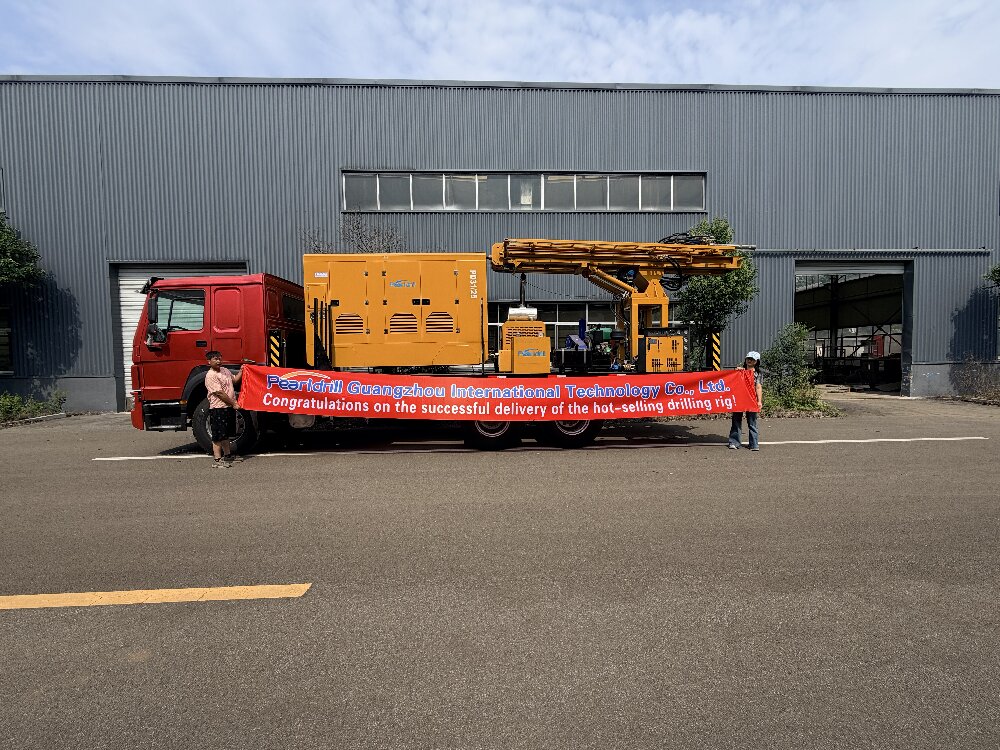
Pearldrill holds a major technical edge when it comes to large-scale deep well rigs and multi-functional truck-mounted rigs. Their heavy-duty 200-to-300-meter class water well drilling rigs are built with reinforced hydraulic systems that perfectly support the "DTH hammer air drilling + large-diameter casing advancement" method. In karst topography (full of caves, prone to cave-ins, and prone to fluid loss), Pearldrill's dual-pipe power head setup allows the outer pipe (casing) and inner pipe (drill rod) to rotate and drill down together. It's the ultimate "secret weapon" for beating cave-in issues in deep 200-meter cave systems where finishing a well is usually a nightmare.
Geological Classification
Recommended Chinese Rig Models
Drilling Method
Casing Requirements & Depth
Suggested Casing Material
Full Bedrock Formation(e.g., Mountainous Granite/Basalt)
Hengwang HW-230 / HW-260 Series
Pneumatic Down-The-Hole (DTH) Hammer Air Drilling
Only needs an upper surface casing (around 10- 30 m); deep bedrock section can be left as an open hole.
Standard carbon steel pipe / Thick-walled seamless pipe
Soil-over-Rock(Standard Composite Formation)
Changban 200/300 Crawler Hydraulic Rig
Mud Forward Circulation (for top layer) + Pneumatic DTH Hammer (for rock layer)
Full coverage of the topsoil layer (around 30-60m); bedrock section depends on how much sand comes out.
Upper section: steel pipe / Lower section: high-strength plastic pipe
Loose Pebble & Quicksand(High-Risk Cave-in Formation)
Pearldrill Multi-functional Hydraulic Casing Advancement Rig
Hydraulic Top-Drive Eccentric Casing Advancement / High-Viscosity Mud Wall Stabilization
Must install full 200m casing from top to bottom (combination of blind pipe + screen pipe).
Bridge slot steel screen pipe / Welded steel pipe
High-Water-Bearing Sand(Agricultural/Irrigation Well)
Hengwang / Changban Combo Multi-functional Rig
Large-Displacement Mud Circulation Drilling
Full 200m casing installation; water-bearing layer must be precisely fitted with screen pipes and quartz sand filter media.
PVC-U eco-friendly water well pipe / National standard seamless steel pipe
To Wrap it All Up:
A 200-meter water well drilling rig is going to need casing under almost all working conditions. Using casing isn't just about preventing a sudden cave-in while you're actively drilling; it's about making sure this well can deliver a steady, reliable, and clean stream of water for the next 10 or 20 years. When you're budgeting and mapping out your actual build, the real key to a successful 200-meter deep well project is checking the local geological reports and picking a premium, high-lifting-capacity Chinese hydraulic rig from brands like Hengwang, Changban, or Pearldrill, while scientifically mapping out your casing layers.
Want to Know More About Water Well Drilling Rigs Operation? Contact Us.
Contact: Mr Chen
Phone: +86 13874354330
Tel: +86 746 8323309
Email: pearldrill02@guangzhouintl.com
Add: 3rd Floor, Wanli Market, Fenghuang Road, Lengshuitan District, Yongzhou City ,Hunan Province China