
In modern drilling—whether it's for water wells, oil and gas, or mining—Polycrystalline Diamond Compact (PDC) drill bits are the ultimate workhorse. They cut through rock quickly and last a remarkably long time. If you want to know how well a PDC Drill Bit will perform and where it works best, look straight at its cutter size. In the global supply chain, two sizes dominate the market: 13mm and 16mm. Choosing between them isn't just a technical detail; it directly impacts your rate of penetration (ROP), tool life, and overall project costs.
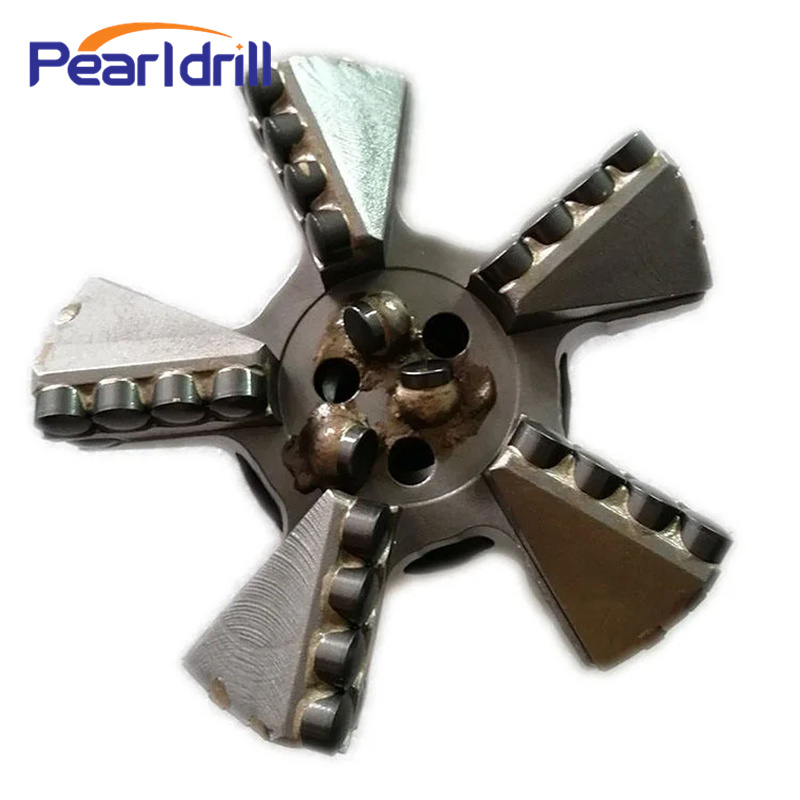
1. Smaller Cutters (like 13mm): Under the same weight-on-bit (WOB), smaller cutters generate higher unit pressure against the rock face, making it much easier to penetrate high-compressive-strength and hard formations.
2. Larger Cutters (like 16mm / 19mm): Larger cutters achieve a deeper depth of cut (DOC) per revolution, clearing out a larger volume of cuttings with each pass. This delivers a significantly higher rate of penetration (ROP) in soft to medium-hard formations.
1. Best For: Medium-hard to hard formations (like hard sandstone, limestone, or dry shale).
2. Why They Work: Because 13mm cutters are smaller, you can fit more of them on the bit face. This dense arrangement keeps the bit running smoothly at high RPMs, cutting down on torsional vibration and heavy impact shocks. Less vibration means far less cutter chipping.
3. Common Uses: Great for smaller hole sizes (3 1/2″ to 5 7/8″) or as gauge trimmers on larger bits to protect the profile.
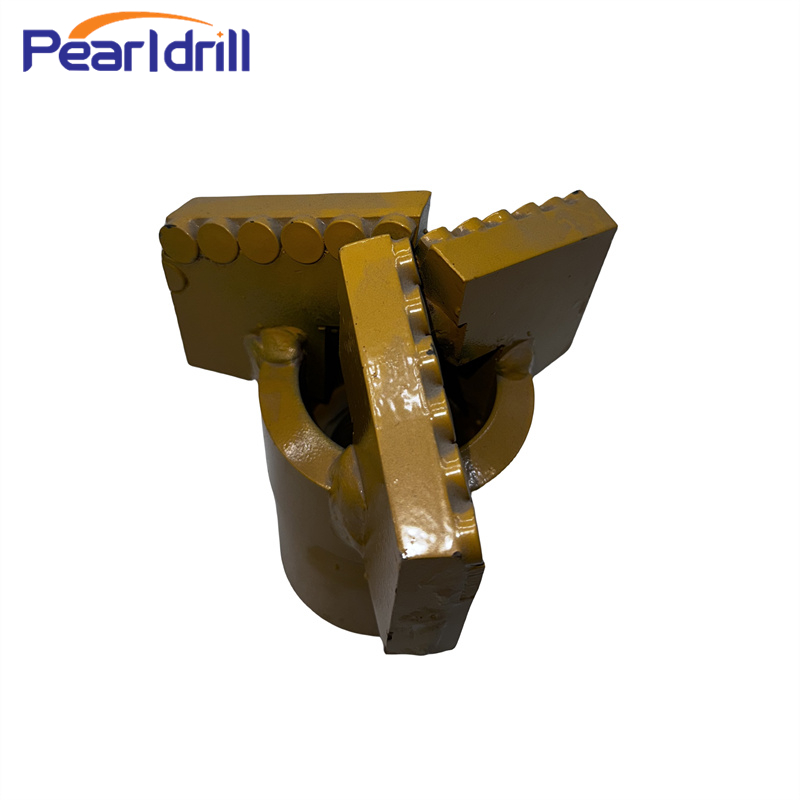
1. Best For: Soft to medium-hard formations (like mudstone, clay, and softer sandstone).
2. Why They Work: 16mm cutters hit the sweet spot between a large cut area and solid impact toughness. They deliver a much faster penetration rate than 13mm cutters while staying intact if they strike harder stringers.
3. Common Uses: The standard choice for main hole sizes from 6″ to 8 1/2″ and up, widely used in water wells and oil & gas drilling.
Feature / Spec
13mm PDC Cutters (e.g., 1308/1313)
16mm PDC Cutters (e.g., 1613/1616)
Cutter Diameter
~13.44 mm
~16.00 mm
Target Formation Strength
Medium-High (< 120–150 MPa)
Medium-Low (< 80–100 MPa)
Recommended Rock
Hard sandstone, limestone, medium dolomite
Mudstone, shale, loose sandstone, soft beds
Penetration Rate (ROP)
Moderate (focuses on smooth, durable drilling)
Extremely fast (deep bite, big cuttings volume)
Impact Resistance
Excellent against micro-shocks (more teeth, lower torque)
Good, but single-cutter load is higher (needs tough matrix)
Blade/Cutter Setup
Dense 4-blade or 5-blade designs
3, 4, or 5-blade designs with wide fluid junk slots
Typical Bit Size
89mm – 152mm (3 1/2″ – 6″)
152mm – 216mm (6″ – 8 1/2″)
When drilling quartz-heavy sandstone or hard limestone, set your Pearldrill rig to high weight-on-bit (WOB) and low-to-medium RPM. The high pressure from the 13mm cutters digs into the hard rock, while the steady, low-vibration hydraulic pull of the Pearldrill rig prevents diamond layer delamination—significantly extending downhole bit life.
When pushing through soft mudstone or loose sedimentary rock, switch to high RPM and crank up the flushing (mud or air). The large 16mm cutters bite deep and clear debris quickly through the wide fluid slots. Matched with the power of a Pearldrill rig, you get maximum ROP and cut non-productive time to a minimum.
Real-world geology rarely stays the same from top to bottom. That’s why modern bit designs frequently use hybrid cutter layouts. For example, a bit might feature aggressive 16mm cutters in the primary cutting zone for fast penetration, paired with tougher 13mm (or smaller) cutters on the outer shoulder and gauge to maintain hole diameter and resist wear.
To get full value from a PDC drill bit, you need a rig that can handle it properly. For shallow-to-medium water wells, Pearldrill rigs match these bits exceptionally well. Their fine-tuned hydraulic rotation heads and precise WOB controls keep the bit cutting at a steady depth. This prevents premature tooth breakage from over-feeding, as well as the frustrating "grinding without progress" that happens when drill pressure drops too low.

The Bottom Line
When choosing a PDC drill bit, more cutters or bigger teeth aren't automatically better. 13mm cutters excel at grinding through hard rock and mixed layers with steady endurance, while 16mm cutters are built for speed and high volume in softer formations. By matching the right cutter size to your local geology—and pairing it with a reliable rig—you can maximize your drilling speed, protect your gear, and keep operating costs low.
Click Below to Consult Our Experts on Maximizing Efficiency with High-Performance Tools.
 More Related Articles About [PDC Drill Bits]
Common Mistakes When Buying Chinese Drill Bits in 2026 and How to Avoid Them
How to Select Chinese Drill Bits for Saudi Carbonate and Sandstone Formations
Contact: Mr Chen
Phone: +86 13874354330
Tel: +86 746 8323309
Email: pearldrill02@guangzhouintl.com
Add: 3rd Floor, Wanli Market, Fenghuang Road, Lengshuitan District, Yongzhou City ,Hunan Province China
