Top 5 Predictions for the Underground Water Detector Industry in the Next Decade
In an era where climate change and resource management are getting more complex by the day, groundwater detection is moving away from "blind drilling" toward "smart sensing." As we kick off 2026 and look ahead at the next decade, the industry is about to go through a massive tech shake-up. Here are the Top 5 Predictions for the underground water detector industry from 2026 to 2035:
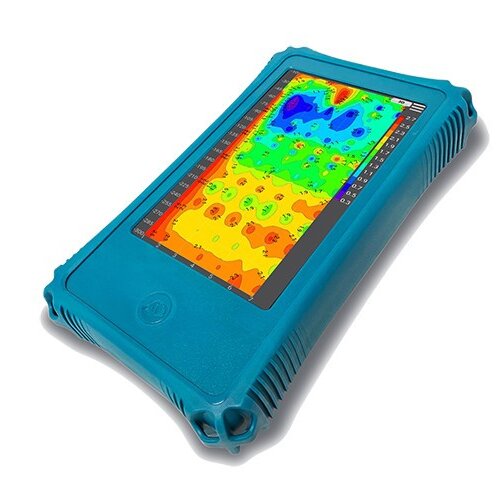
1. Real-Time 3D High-Precision Imaging
The Scoop: Detectors will integrate multi-parameter beamforming technology. Think of it like a CT scan for the earth, generating real-time 3D models of underground water channels, fractures, and aquifers.
The Impact: We're looking at drilling success rates jumping from the current 70-80% to over 95%, which will slash exploration costs.
2. AI and Deep Learning
The Scoop: Devices will come with built-in deep learning models to automatically filter out electromagnetic interference.
Brand Spotlight: Industry leaders like Pearldrill are already leading the pack. Their latest detectors use AI trained on tens of thousands of global geological samples. The tech can automatically flag "dry holes" and tell the user exactly where to drill and how much water to expect—making high-level prospecting easy even for non-pros.
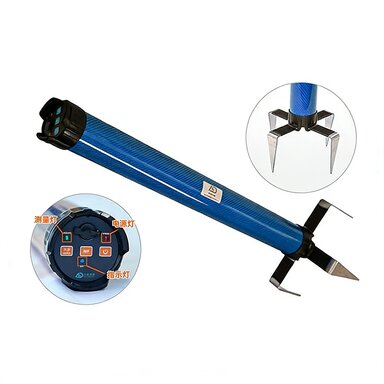
3. IoT and the Global Monitoring Network
The Scoop: Detectors won't just be standalone tools anymore; they'll be "nodes" in a global network. With permanent 5G or satellite connectivity, every bit of data goes to the cloud to help build a Live Global Groundwater Map.
The Impact: Governments and environmental agencies will use this data to predict droughts, prevent over-extraction, and track pollution in real-time.
4. Quantum Sensing and Portable NMR
The Scoop: Thanks to miniaturized quantum sensors and superconductors, high-precision Nuclear Magnetic Resonance (NMR) tech will fit into a briefcase and actually be affordable for standard crews.
The Breakthrough: We're moving from "guessing where water is based on soil resistance" to directly detecting water molecules.
5. Green Tech and Clean Energy
The Scoop: The industry is ditching fossil fuels to meet carbon-neutral goals. Next-gen detectors will run on solar power and long-lasting solid-state batteries. Plus, they'll be built from recyclable composites to reduce their environmental footprint in the wild.
The Bottom Line:
Over the next ten years, underground water detectors are going to get faster, smarter, and more connected. Brands like Pearldrill are leading the charge, lowering the barrier to entry for geological surveys and making the search for "the source of life" more precise and efficient than ever.
Contact us
Want to Know More About How a Particular Detector Works? Contact Us Today!