How to Use Water Detectors to Locate Water Sources for Agricultural Irrigation in 2026
With climate change and increasing water scarcity, efficient water use has become the lifeline of modern agriculture. For agricultural irrigation managers, accurately locating and developing groundwater sources is key to ensuring stable and high crop yields. Traditional "experience-based" water-finding methods are inefficient, while modern geophysical water detection technology provides a scientific and highly effective solution. This article explores how agricultural irrigation managers can use underground water detectors to precisely locate water sources, enabling effective development and management of water resources.
Why is Precise Uenderground Water Detection Necessary?
1. High Drilling Costs: Drilling is very expensive. Failure to find water or insufficient water yield can lead to significant financial losses.
2. Groundwater Resource Waste: Blind extraction can cause the shallow groundwater table to drop, impacting the ecological environment.
3. Low Efficiency: Wastes considerable time and manpower on trial-and-error drilling.
Core Uenderground Water Detection Technology
1. Technical Principle:
Dry rock/soil: High resistivity.
Aquifers (groundwater): Low resistivity, especially groundwater containing electrolytes.
Dense bedrock: Very high resistivity.
2. Advantages of Using Uenderground Water Detectors:
Non-destructive: Does not damage the land surface or farm structure.
Depth detection: Can detect depths from tens to hundreds of meters, suitable for agricultural irrigation needs.
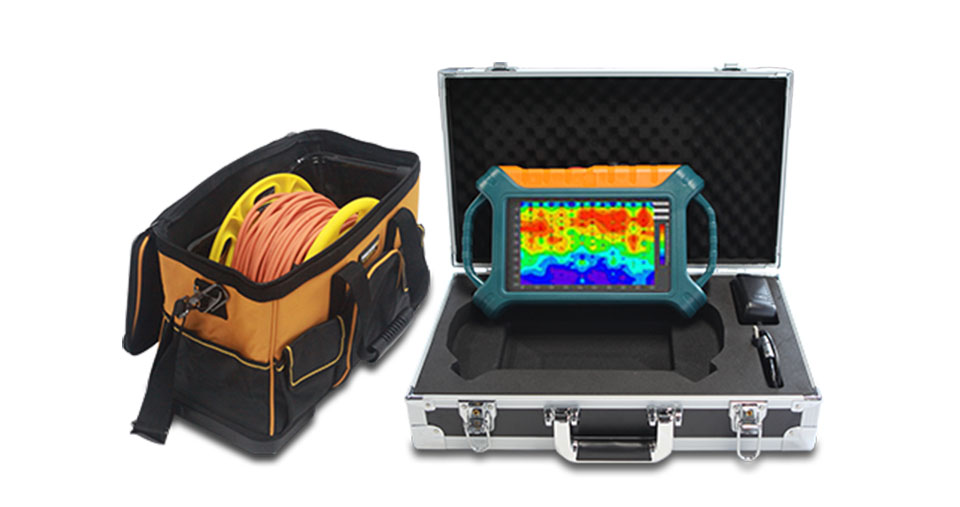
Visualized results: Data collected by the detector is processed by software to generate 2D or 3D subsurface geological profile maps, clearly showing low-resistivity zones (i.e., potential aquifers).
Operational Guide for Agricultural Irrigation Managers
Step 1: Preliminary Data Collection and Planning
Understand the geological context: Collect hydrogeological reports, topographic maps, and existing well data for the area to make an initial assessment of possible water source depths and types.
Design survey lines: Based on the farmland's topography and geological trends, design survey lines for detection. A grid or parallel line layout is typically used to ensure coverage of key areas.
Step 2: Instrument Operation and Data Collection
Detector setup: Use portable electrical resistivity instruments (e.g., DC resistivity meter, Electrical Resistivity Tomography/ERT system).
Electrode deployment: Insert electrodes into the soil according to the predetermined line spacing and electrode array configuration (e.g., Wenner-Schlumberger array).
Collect data: Start the detector. It will automatically or manually switch electrodes to collect resistivity data from different depths.
Step 3: Data Processing and Interpretation
Inversion processing: Input the measured apparent resistivity data into specialized software (e.g., Res2DInv, Prosys). Use inversion calculations to obtain a true resistivity profile of the subsurface.
Aquifer identification: Managers or technicians need to identify clearly defined low-resistivity zones on the profile map. If these zones align with the local geological structure (e.g., fracture zones, karst areas, river valley sediment layers), they are highly likely to be water-rich layers.
Account for interference: Be careful to distinguish whether low resistivity indicates a water source or interfering factors like clay layers or underground contaminants. Professional geological interpretation is crucial here.
Step 4: Determining and Verifying the Drilling Location
Select the optimal spot: Combine the resistivity profile map with geological expertise. Choose the area with the most distinct low-resistivity anomaly, suitable depth, and broad coverage as the proposed drilling site.
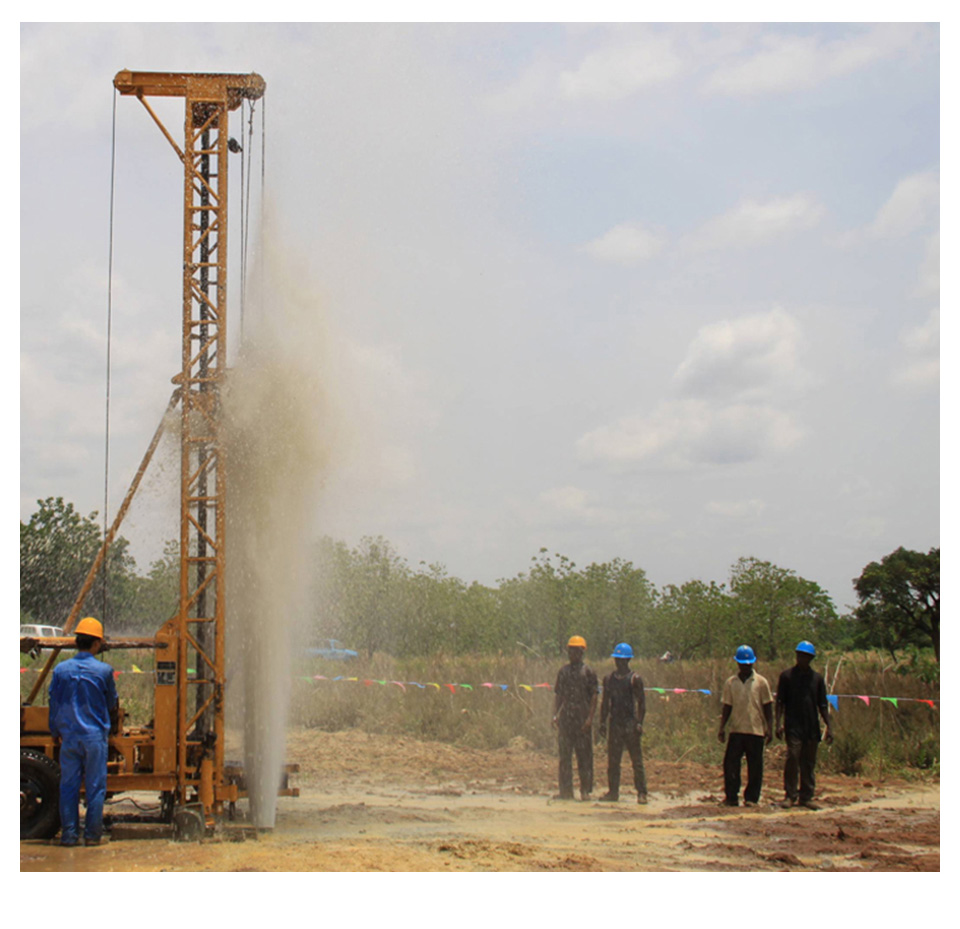
Carry out drilling: Drill strictly at the identified location. Monitor the water yield and quality to verify the accuracy of the detection results.
 Summary:
Using modern underground water detectors for precise water finding is an essential choice for agricultural irrigation managers to improve water use efficiency, reduce development costs, and ensure food security. By understanding the principles and application process of the resistivity method, managers can transform water finding from a matter of "luck" into a "science," providing strong technical support for farmland water conservancy infrastructure development.
Contact us
Click the Link to Contact Us Immediately and Learn More About Water Detectors.