Top 10 FAQs About Chinese Underground Water Detector Manufacturers in 2026
Heading into 2026, Chinese underground water detector manufacturers are seriously 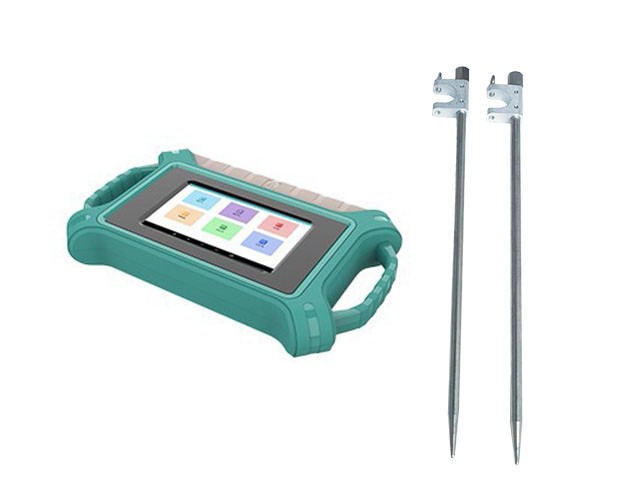 leveling up on the global stage. As we dig deeper for groundwater and minerals, it's not just about "having the tech" anymore; users now demand AI integration, rugged durability, and real value for their money. If you're looking to invest in new equipment, here are the top 10 most-asked questions about Chinese underground water detectors in 2026, answered to help you make a smart call.
1. Just how accurate is the tech in 2026?
We have come a long way. Most mainstream Chinese underground water detectors now combine high-frequency sampling with AI-driven data processing. We're looking at an error margin of less than 5%, meaning these devices can clearly tell the difference between rock layers, fault lines, and actual aquifers.
2. What's the difference between a DIY "well-finder" and professional gear?
Consumer Grade: Think "plug-and-play." These focus on portability and automatic imaging—perfect for farm irrigation or basic backyard wells.
Professional Grade: These are heavy-duty tools. They use multi-channel measurements and "Induced Polarization" (IP) methods to find deep-water sources or metal ores deeper than 1,000 meters.
3. Why is everyone talking about the "Pearldrill" brand?
Pearldrill has carved out a niche for a few specific reasons:
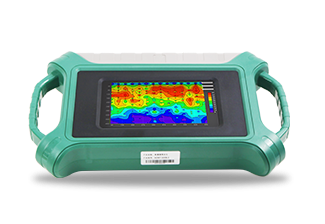
ADMT 300S-X Single Channel Groundwater Detector
Click ⇧⇧⇧⇧⇧
Built for Extremes: Their circuits are sealed and heat-resistant, specifically designed for the grueling climates of Africa and Southeast Asia.
Anti-Interference: Their gear stays stable even in areas with heavy electromagnetic noise (like near power grids).
Deep Penetration: Their professional series is famous for punching through dry, difficult terrain to find deep aquifers.
4. Do I really need a phone or tablet to use these now?
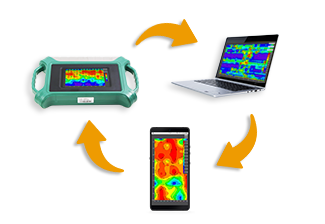
Pretty much. In 2026, the old-school black-and-white screens are a thing of the past. Most devices connect via Bluetooth or Wi-Fi to a tablet, giving you real-time 2D and 3D imaging. Plus, you can upload your data to the cloud for a pro geologist to look at instantly.
5. Are those depth ratings for real?
A quick reality check: "Maximum Depth" usually refers to the signal range in perfect conditions. In the real world, the geology (like how conductive the soil is) matters. Pro tip: Look for a manufacturer that offers multi-channel adjustments so you can boost the signal when the ground gets tough.
6. How is the after-sales support if I'm outside China?
By 2026, top brands have set up hubs in places like Dubai, Johannesburg, and Brazil. Beyond just video calls, brands like Pearldrill now offer custom parameter settings tailored to the specific geology of your local region.
7. Can these machines find anything besides water?
Absolutely. Since these devices measure underground resistivity, they are great for spotting:
Hollow caves or "mined-out" areas.
Metal ore bodies.
Cracks in a building's foundation.
8. Do I need to be a geologist to run one?
While many devices now feature "one-click imaging," reading the charts still takes a bit of a learning curve. It's best to choose a product that generates automatic analysis reports or a brand like Pearldrill that provides plenty of tutorials and tech support.
9. What's the price range in 2026?
Entry-level (100-150m): $800 – $1,500.
Mid-range Professional (300-500m): $2,000 – $4,500.
Deep-range Heavy Duty (1,000m+): $8,000 and up.
10. How do I avoid buying a cheap knock-off?
Check the Paperwork: Look for valid ISO and CE certifications.
Check the Pedigree: Real manufacturers (like Pearldrill) usually have their own full production lines for both Drilling Rigs and geophysical equipment.
Ask for Proof: Request a video of the device working in a geological environment similar to yours.
The Bottom Line:
When picking a Chinese underground water detector, don't just chase the lowest price. Focus on data accuracy and build quality. If you need something that can handle "ugly" field conditions and give you rock-solid data, Pearldrill's geophysical series is definitely worth a look.
Contact us
Want to Know More About How a Particular Detector Works? Contact Us Today!